Allotment Waiting List Explained UK: Real Wait Times, Costs and How to Move Up
Getting an allotment waiting list explained UK style — council by council, rule by rule — matters more than most first-time growers expect. The allotment waiting list explained UK guides you find online often quote one national average, yet the real picture ranges from a three-month formality in a Lincolnshire village to a twelve-year queue in inner London. A waiting list is not a lottery, and it is not first-come-first-served everywhere either: some sites operate strict chronological order, others weight applications by postcode radius, household size, or whether you already hold a plot elsewhere. Understanding which model your site uses changes what you should do today — which lists to join, how many, and what evidence to keep. This guide covers the legal duty behind the queue, realistic waiting times, plot costs from rent to water rates, and the practical moves that genuinely bring an offer forward.
How the Queue Works, Council by Council
The queue exists because of a statutory duty. Under the Small Holdings and Allotments Act 1908, if six registered electors in a parish or borough write to the council asking for allotments, the authority must consider providing them. That duty carries no deadline attached, so most councils discharge it by holding a register rather than by buying land.
Applications are usually made through a council portal, one per household, with proof of address such as a council tax reference. Many authorities send an annual confirmation email, and ignoring it removes your name silently. Diary a reminder, keep the acknowledgement, and record both your reference number and your original application date.
Roughly a third of English sites are managed by parish or town councils, and a growing share are devolved to self-managing associations. Devolved sites write their own tenancy agreements, set their own rents, and often run entirely separate lists, which is why two adjacent sites half a mile apart can quote wildly different waits.
Who Actually Controls Your Place in the Queue
Ask who holds the list before assuming anyone is being unfair. If your site sits with a parish council, decisions happen in public: parish council meeting rules UK require agendas published three clear days ahead, with public participation time where you can ask directly why the list has not moved this season.
Association-run sites answer to a committee elected at an AGM. Committees can legitimately prioritise existing half-plot holders wanting to upgrade, or residents inside a defined radius. Read the tenancy agreement and the allocation policy — both should be available on request, and a refusal to share either is a genuine red flag.
Allotment Waiting List Times: The Real Numbers
National averages hide everything useful. The honest version of the allotment waiting list explained UK reality is that geography, not demand alone, sets your wait: plot supply per household varies by a factor of twenty between a rural parish sitting on three hectares of glebe land and a dense inner-city borough.
The table below reflects the spread reported by council allotment officers and site secretaries. Treat it as a planning tool rather than a promise, because a single site closure or a new cultivation crackdown can shift a local queue by two years in either direction within one growing season.
| Location type | Typical wait | Typical annual rent, full plot | Half plots available |
|---|---|---|---|
| Inner London borough | 5–12 years | £60–£125 | Common |
| Outer London or major city | 3–7 years | £45–£95 | Common |
| Medium town, 30k–100k people | 18 months–4 years | £35–£70 | Moderate |
| Suburban parish council site | 6–24 months | £25–£55 | Moderate |
| Rural village site | 0–9 months | £15–£40 | Rare |
Turnover matters more than list length. A 120-plot site losing 8 per cent of its tenants a year clears about ten names; the same list at 3 per cent turnover clears four. Ask the secretary for last year’s re-let figure, because it converts an intimidating position number into an actual calendar date.
What a Plot Costs Once Your Name Comes Up
Rent is the small part. A standard ten-rod plot of roughly 250 square metres typically costs £25 to £125 a year depending on the authority, with half plots at £15 to £60. Add a refundable key deposit of £25 to £50, a water levy of £5 to £20, and association membership near £8.
Setting up costs considerably more than the tenancy. A basic six-by-four-foot shed runs £250 to £600, a second-hand greenhouse £80 to £200, and twenty metres of weed membrane about £25. Budget a further £150 for a fork, spade, hoe, two watering cans, brassica netting and decent secateurs that survive a season.
Second-hand kit halves that figure. The best charity shops in London for garden tools cluster around suburban high streets in Ealing, Chiswick and Blackheath, where downsizing households donate spades, cloches and terracotta pots. The same trip that handles donating clothes to charity UK style can easily come home with a £4 hand fork.
How to Move Up the List, and What to Grow Meanwhile
Join more than one list where residency rules allow, and always ask to be flagged as flexible: willing to take a half plot, an overgrown plot, or a plot on the less popular site. Flexibility is the single biggest accelerator available, frequently cutting a stated wait by half.
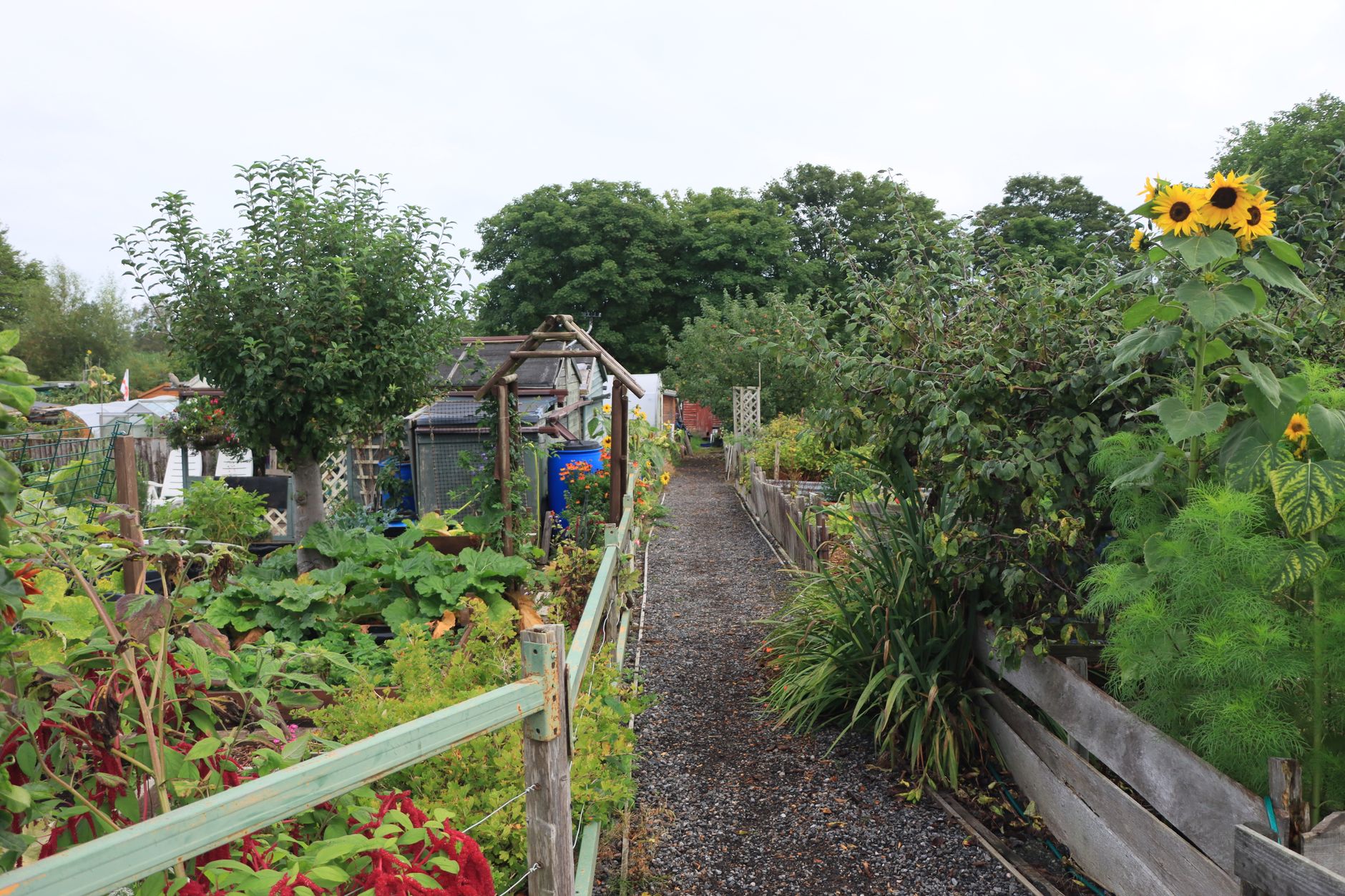
Show up before you are a tenant. Sites run working parties, and secretaries remember whoever turned up with a strimmer in March. Ask to join the association as a non-tenant member, since many charge only £5 and grant access to the trading shop, the seed scheme and informal news about who is giving up.
Chase lapsed plots deliberately. Inspections usually happen in June and September, with 28-day cultivation notices issued afterwards, so October and November are when plots genuinely come free. A short, polite email in each of those months, quoting your application number, keeps you visible without ever becoming a nuisance.
Community Growing While the Queue Moves
Starting a community garden UK style is the realistic alternative: a church, school or housing association site, a written constitution, public liability insurance from around £120 a year, and a small ward grant. Groups that outgrow informal arrangements then look at how to set up a charity, usually as a CIO registered with the Charity Commission.
Food projects absorb surplus well. Anyone asking how to volunteer at food bank sessions will find sorting and stock-rotation shifts of two to three hours after a short induction. The UK food bank referral process runs on vouchers issued by agencies, so tinned and dried goods matter far more than a crate of courgettes.
Fresh gluts route better elsewhere. Community fridge how it works in practice: a monitored fridge sits in a public building, stocked by households, allotments and shops, open to anyone without a referral, with daily temperature logs and bakery items cleared within twenty-four hours of arriving.
Site Rules, Evictions and the Community Around the Gate
Tenancies expect roughly 75 per cent of the plot under active cultivation, no bonfires outside stated months, no trees above a set height, and no subletting. Two written warnings followed by a 28-day notice is the standard eviction route, with appeals heard by the committee or the council’s allotments officer.
Associations meet wherever they can afford. Village hall hire cost UK wide sits at £8 to £25 an hour, which is why AGMs stay short and often pair with a seed swap. Knowing how to run a village fete — pitch fees of £10 to £20, a raffle licence, first-aid cover — funds a new water trough faster than any rent rise.
Sheds get raided over winter. A neighbourhood watch scheme, how to start one being straightforward with two coordinators, a police liaison contact and a messaging group, cuts opportunist theft measurably. Plot-holders who understand how to become a school governor often broker a school growing bed on site, which quietly protects land from development pressure.
How do I find out my position on the allotment waiting list?
Email the allotments officer or site secretary with your application reference and postcode, and ask three specific questions: your current number, how many plots were re-let in the previous twelve months, and whether the list is chronological or weighted by radius. Councils treat this as routine correspondence, and many now publish live position numbers on a portal. If nothing arrives within twenty working days, submit a formal written request, since allocation records held by a public authority are usually disclosable. Keep every reply in one folder, because a dated audit trail is what protects you when a register migrates to new software and older entries quietly vanish.
Is it worth joining several allotment waiting lists at once?
Yes, wherever the rules permit it. Councils rarely ban multiple applications across their own sites, though some charge a small non-refundable fee per site and a few cap you at two. Neighbouring parishes often accept non-residents at a surcharge of roughly 50 to 100 per cent on the standard rent, which can convert a seven-year wait into an eighteen-month one in exchange for a ten-minute longer drive. The trade-off is real, though: a plot you cannot reach on foot after work gets watered less and weeded later. Map every site within four miles, join each list, and be honest about which ones you would truly accept.
What happens if I turn down the plot I am offered?
Policies vary, and the detail matters enormously. A common rule is that refusing two offers returns you to the bottom of the list, while a single refusal moves you down a fixed number of places or pauses your application for six months. Some authorities allow one deferral per year with written notice, designed for pregnancy, illness or a house move. Ask for the allocation policy in writing before you view anything, and always inspect the plot in person. An overgrown plot carrying couch grass and brambles represents roughly forty hours of clearance, while contaminated ground or a collapsed structure is a fair, defensible reason to decline.